Google Explains Importance Of Hyphens In URLs
Google recommends using hyphens in URLs to help it read word boundaries, which can improve search engine results. This clarification explains an existing preference, not a new ranking rule.
Original reporting · searchenginewatch.com
Original: “Google explains why hyphens help it read the words in your URLs”
Read “Google explains why hyphens help it read the words in your URLs” at Search Engine Watch →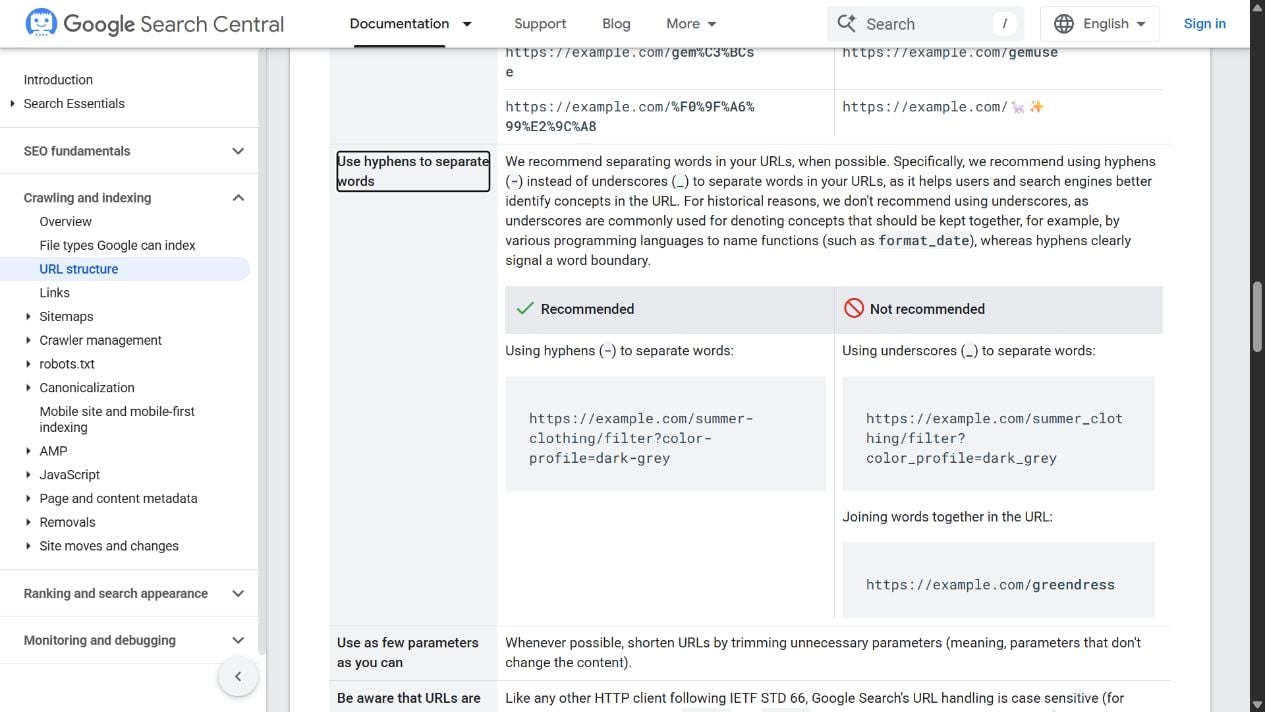
How this was written. Content Catalyst wrote this article with a language model from Search Engine Watch’s reporting (model: @cf/meta/llama-3.3-70b-instruct-fp8-fast); it describes that reporting rather than adding to it. The original, linked above, is the full story.
Key points from Search Engine Watch’s report
- Google recommends using hyphens in URLs to help it read word boundaries.
- The use of hyphens provides a clearer separation between words, making it easier for search engines to understand the content of a URL.
- Changing existing URLs requires a separate plan to minimize disruptions, including mapping old addresses to new ones and configuring permanent redirects.
- Temporary fluctuations in search engine rankings may occur after changing existing URLs.
- Google's site-move guidance provides more information on how to handle changes to URL paths and domains.
Google has provided clarification on its preference for hyphens over underscores in URLs. According to Search Engine Watch, this recommendation is based on the idea that hyphens help mark word boundaries. This distinction is important for search engines and users to identify concepts in a URL.
The use of underscores has a different history, rooted in programming conventions where they are used to keep concepts together. In contrast, hyphens provide a clearer separation between words, making it easier for search engines to understand the content of a URL.
Google's guidance on URL structure emphasizes the importance of using hyphens to separate words in paths and query parameters. For example, the company recommends using /summer-clothing/ instead of /summer_clothing/. This approach is also applied to query strings, where hyphens are used to separate words.
In addition to using hyphens, Google also recommends using readable words, the audience's language, and minimizing unnecessary parameters. These guidelines provide a consistent format for teams to use when planning new sections or catalogs. By following these recommendations, site owners can create URLs that are easy for users and search engines to understand.
For site owners who are considering renaming existing pages, Google advises checking the default slug settings in their publishing system. This can help ensure that new articles or products are created with the recommended URL format, without changing the location of existing pages that are already linked to by readers and other websites.
If a site owner does decide to change existing URLs, they will need to implement a separate plan to minimize disruptions. This includes mapping old addresses to new ones, configuring permanent redirects, and updating internal links and sitemaps. According to Search Engine Watch, Google's site-move guidance provides more information on how to handle changes to URL paths and domains.
It is worth noting that changing existing URLs can lead to temporary fluctuations in search engine rankings. As Google recrawls and reindexes pages, it may take some time for the new URLs to replace the old ones in search results. The exact timeframe will depend on the size of the site, with larger sites potentially taking longer to update.
Questions and answers
Why does Google recommend using hyphens in URLs?
Google recommends using hyphens in URLs because they help mark word boundaries, making it easier for search engines to understand the content of a URL.
Do I need to rename existing pages to use hyphens?
No, Google does not require site owners to rename existing pages, but it does recommend using hyphens for new pages.
What happens if I change existing URLs?
Changing existing URLs can lead to temporary fluctuations in search engine rankings, and site owners will need to implement a separate plan to minimize disruptions.